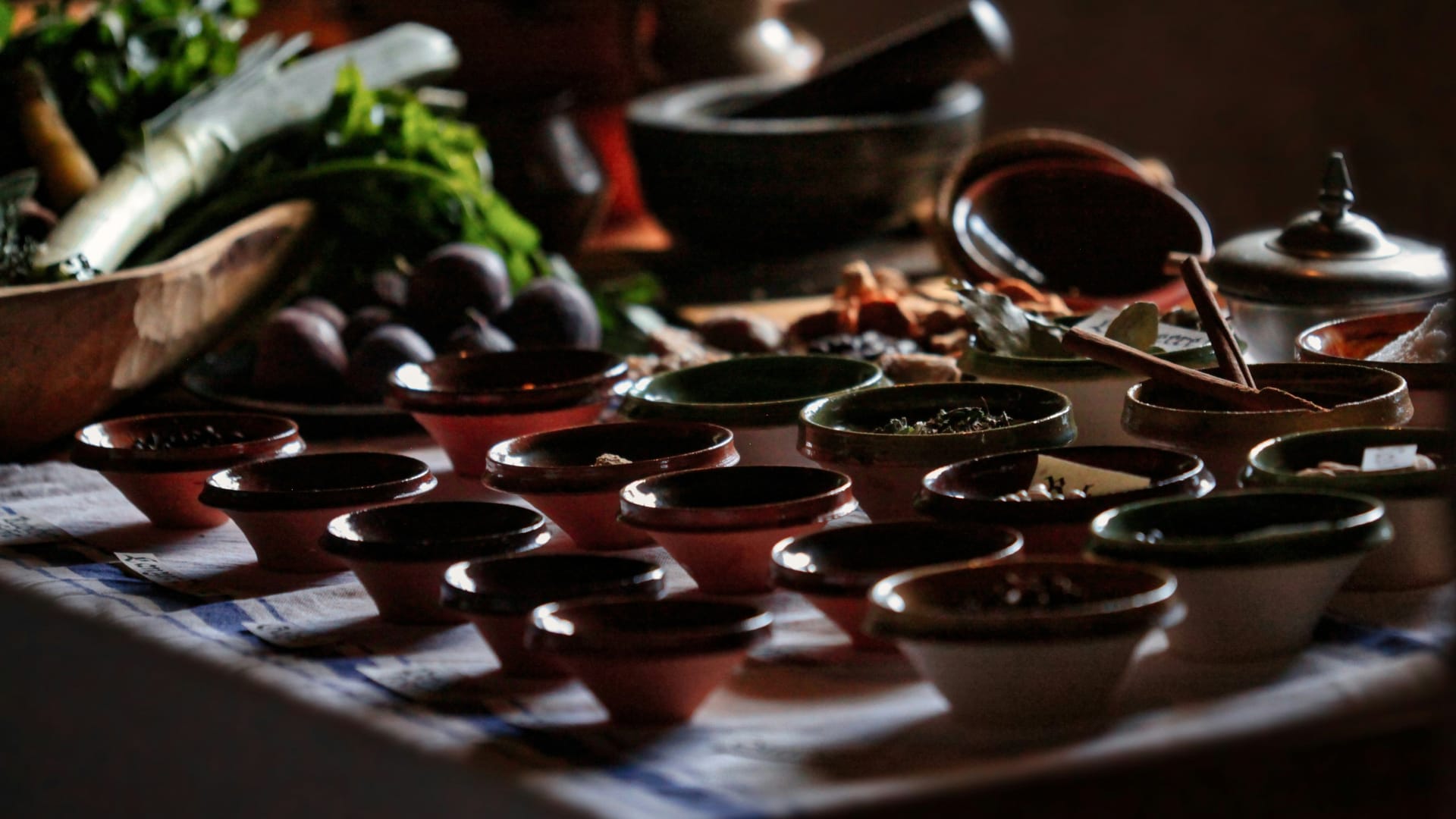
In Türkiye, cuisine is not a single tradition arranged neatly inside national borders. It is a living archive. Ingredients move. Techniques survive in one region and change in another. Table customs carry traces of family history, religious calendars, urban life, coastal exchange and the practical intelligence of people who learned how to preserve, share and transform what a place could provide.
This is what CREARE means by culinary memory: not nostalgia, and not a catalogue of famous dishes, but the way culture remains present through taste, preparation, hospitality and repetition.
A recipe is never only a recipe. It records decisions about what was available, what could be stored, which ingredients were valued, who cooked, who served, when people gathered and what form hospitality took. Even when the original context changes, fragments of that history remain embedded in technique and ritual.
Ottoman culinary memory makes this especially visible. Palace kitchens developed their own systems of refinement, hierarchy and documentation, but courtly food did not exist in isolation from the wider geographies that fed the empire. Ingredients, methods and preferences moved between regions, communities and households. The result was not one fixed cuisine but a layered field of influence.
That is why a meaningful culinary encounter should not begin with the question 'What should we eat?' The stronger question is 'What does this table allow us to understand?'
In Istanbul, that may mean reading the table as a map of movement. Spices, grains, fish, preserved foods, sweets, coffee and meyhane culture all belong to different systems of memory. The city receives, adapts and redistributes culinary forms just as it has received and redistributed people, goods and ideas for centuries.
Along the Aegean, the logic changes. Olive oil, herbs, fish, vegetables, vines and seasonal produce connect the table directly to cultivated landscapes. Here, culinary memory can be read through harvest rhythm, producer knowledge, climate and the social architecture of a shared table. The point is not rustic simplicity as an aesthetic. It is continuity between land, labor, kitchen and guest.
Bodrum reveals another layer. The peninsula's modern hospitality culture sits on top of older habits of coastal gathering, fishing, cultivation and long conversation around the table. A sophisticated meal there does not become meaningful because it is expensive. It becomes meaningful when it remains connected to place rather than floating above it.
This distinction matters because luxury travel has a tendency to separate gastronomy from context. A celebrated chef, a private table, a rare ingredient or an inaccessible venue can all be valuable, but they do not automatically create cultural depth. Without context they remain privileges. With context they can become interpretation.
For CREARE, the design task is to connect taste with memory without turning culture into theatre. That may mean working from a historic culinary source, meeting someone whose knowledge comes from practice, following an ingredient from cultivation to preparation, or allowing a table to unfold slowly enough for conversation to become part of the encounter.
Imperial Flavors, for example, is most interesting not as a cooking activity but as a way of asking how culinary knowledge survives across time. The value lies in the translation between archival memory, contemporary technique and the senses of the guest. The dish is the medium; the deeper subject is continuity.
The same principle applies outside Istanbul. A farm, vineyard, olive grove, fish market or domestic table can become culturally significant when the encounter reveals relationships that are normally invisible: between producer and season, host and guest, ingredient and geography, ritual and memory.
This is also where restraint becomes important. Not every cultural practice should be staged. Not every kitchen should become a performance. Not every private tradition should be made available because a visitor is willing to pay. Culinary access has meaning only when the people who hold the knowledge remain subjects of the encounter rather than props inside it.
A well-designed culinary experience therefore creates attention before consumption. It helps the guest notice why a flavor belongs where it does, what history sits behind a technique, how a meal organizes social life and why hospitality can be a form of cultural transmission.
The result is a different understanding of Turkish food. Instead of a checklist of kebabs, meze, baklava or coffee, the cuisine begins to appear as a network: imperial and domestic, urban and rural, coastal and inland, inherited and continually reinterpreted.
That network is what makes culinary memory valuable. It is not fixed in the past. It is alive precisely because people keep cooking, gathering, adapting and remembering.
For the culturally curious guest, this changes the role of food in a journey. The meal is no longer a break between important moments. It becomes one of the ways a place explains itself.
Türkiye has no shortage of remarkable food. The deeper opportunity is to encounter the memory carried inside it.