Some of the most important forms of heritage remain alive because people continue to practise them.
A craftsperson repeats a technique learned through years of observation. A family preserves a way of receiving guests. A cook prepares a dish whose meaning depends on season and memory. A musician understands not only what to play but when silence belongs inside the performance. A workshop, table, garden, boatyard or domestic room becomes an archive because knowledge is still being used there.
This is living heritage: cultural knowledge carried through practice, relationship and continuity rather than stored only as evidence of the past.
Türkiye is exceptionally rich in this kind of heritage because so many cultural layers remain present at the same time. Ancient material culture, Byzantine and Ottoman inheritances, regional craft traditions, agricultural practices, maritime knowledge, domestic rituals and contemporary artistic interpretations do not exist as separate historical chapters. They overlap in daily life.
The challenge for travel is that living heritage is easy to flatten. A craft becomes a demonstration. A ritual becomes entertainment. A neighborhood becomes an aesthetic. A maker becomes a character inside someone else's story. Once that happens, the visitor may see more but understand less.
CREARE approaches living heritage differently. The aim is not to extract culture from its context. It is to create the conditions for a respectful encounter with the people and systems that keep it alive.
That changes the role of access. Access is not simply permission to enter somewhere private. It is permission to come close to knowledge that belongs to someone else. The quality of the encounter therefore depends on trust, timing, preparation and reciprocity as much as on rarity.
In Istanbul, living heritage often survives behind thresholds. It can be found in workshops where material knowledge passes between generations, in private collections maintained as acts of custodianship, in domestic spaces where hospitality carries its own etiquette, and in cultural practices that remain meaningful because they were never reorganized for spectators.
The city teaches an important lesson: visibility is not the same thing as importance. Some forms of culture survive precisely because they have remained outside the logic of constant display.
Bodrum offers a different model. There, maritime practice, boatbuilding knowledge, cultivation, hosted table culture and the memory of an intellectual coast show how heritage can live across a landscape rather than inside a single institution. The relationship between sea, land, craft and hospitality creates a cultural system that is still being performed through ordinary life.
Cappadocia makes the relationship between continuity and adaptation especially clear. Rock-cut architecture, agricultural life, settlement patterns and sacred memory demonstrate how people respond to geology over long periods of time. Living heritage is not only what has remained unchanged. It is also the intelligence of adapting without severing continuity.
For Cultural Experience Design, these distinctions matter because the strongest encounter is rarely the one with the most explanation. A guest does not need every technique turned into a lesson or every ritual translated into a performance. Sometimes the right design is simply to create enough context for attention, then allow practice to retain its own rhythm.
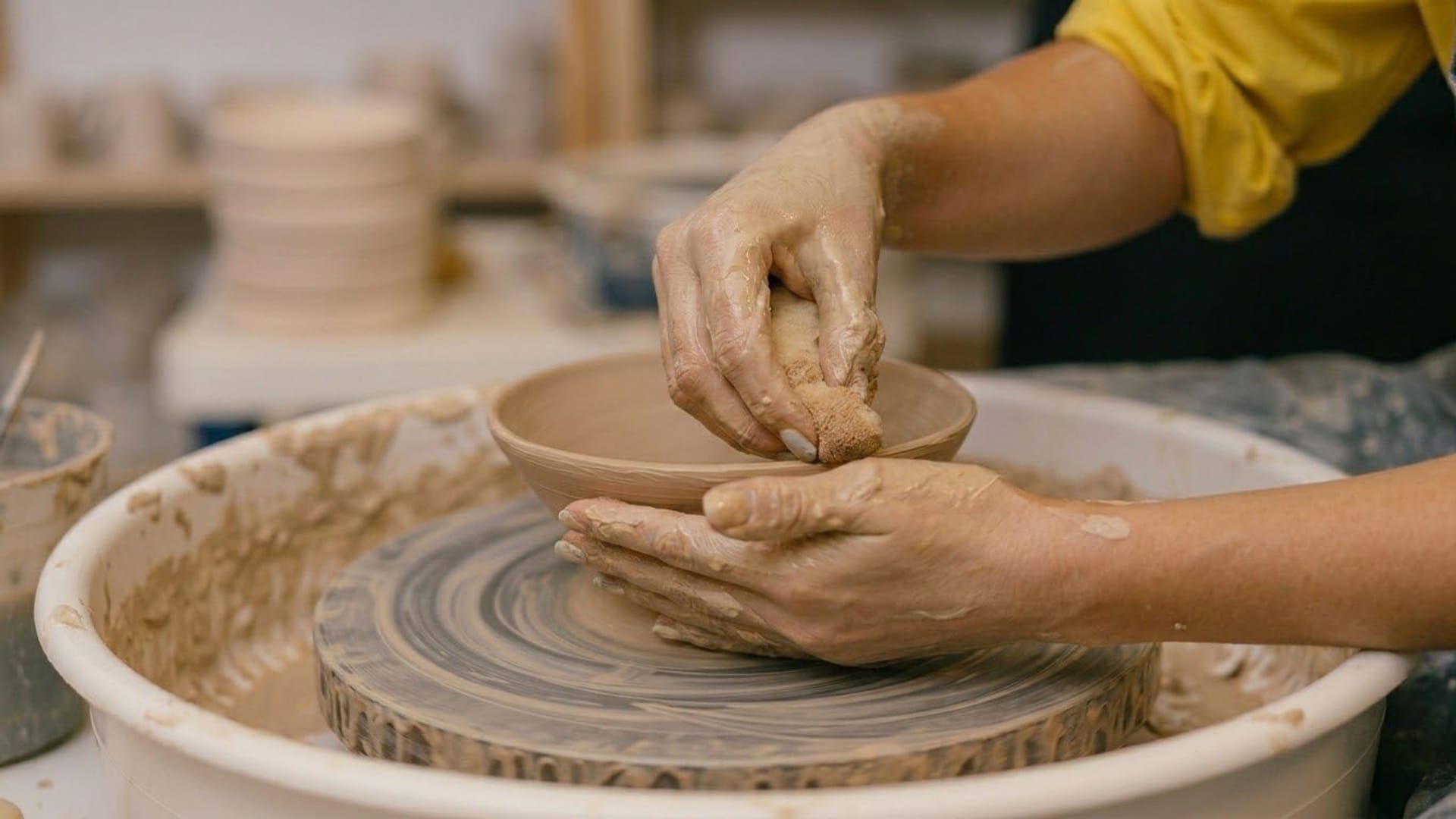
The Salon of Hands reflects this principle. Working with material is meaningful not because the guest temporarily becomes an artisan, but because proximity to process changes how craft is perceived. The hand, the material, the pace of making and the accumulated sensitivity of the practitioner become visible without pretending that expertise can be acquired in an afternoon.
This is the difference between participation and appropriation. Participation respects the depth of a practice. Appropriation reduces that practice to an experience format.
The same rule applies to ritual. Ritual is powerful because it belongs to a system of meaning. Remove the system and only the gesture remains. A culturally intelligent encounter therefore asks what can be shared without weakening what is being shared.
This is why living heritage cannot be scaled like a conventional tourism product. The people who hold the knowledge have limits. The spaces have limits. Trust has limits. A responsible design respects those limits instead of treating scarcity as a marketing device.
For the guest, the reward is not simply exclusivity. It is a different relationship with culture. Heritage stops being something observed from the outside and becomes something understood through proximity to the people who continue to carry it.
For the host or custodian, the encounter should preserve agency. They are not supporting cast. They are the reason the knowledge remains alive.
This is the territory CREARE wants to work inside: not culture as decoration, not heritage as backdrop, but living systems of memory approached with attention, permission and restraint.
Monuments tell us what survived. Living heritage tells us how culture continues. The distinction changes everything.