This is a legitimate choice. The beach club serves a real demand. But it has done something to the way Bodrum is perceived that is worth examining: it has made the peninsula legible primarily as a leisure destination, a place where the primary activity is the performance of relaxation. And in doing so, it has obscured something that was here long before the sunbeds arrived and that will be here long after they are gone.
Remove the beach clubs. Remove the marina crowd. Remove the international restaurants and the boutique hotels and the summer people who arrive in June and depart in September. What remains is a peninsula that has been doing something else entirely for three thousand years — farming, fishing, building boats, trading across the Aegean, accumulating a relationship with the sea that is functional and serious and entirely indifferent to aesthetics.
The cultural world of Bodrum is built around this remainder. Around the understanding that the peninsula's value is not primarily scenic but historical and agricultural and maritime — that it is a place where civilisation has been accumulating since the Bronze Age, and where that accumulation is still visible if you know where to look.
The rhythm of Bodrum without beach clubs is the rhythm of the olive harvest. It begins in November, when the summer people are gone and the peninsula returns to itself. The nets go under the trees. The families come out from the villages. The olives are picked by hand, as they have been picked for centuries, and taken to the press, and the oil that comes out is the colour of pale gold and tastes of the specific soil and the specific light of this specific peninsula. There is no other olive oil that tastes like this, because there is no other place that is exactly this.
The rhythm is also the rhythm of the fishing boats. They go out before dawn and return by mid-morning, and what they bring back is not a product but a relationship — between the fisherman and the sea, between the sea and the table, between the table and the people sitting around it. The fish market in the town centre, before the tourists arrive, is a transaction between people who know each other. The prices are not posted. The quality is understood. The conversation is about the weather and the catch and the state of the sea, not about the experience of purchasing seafood.
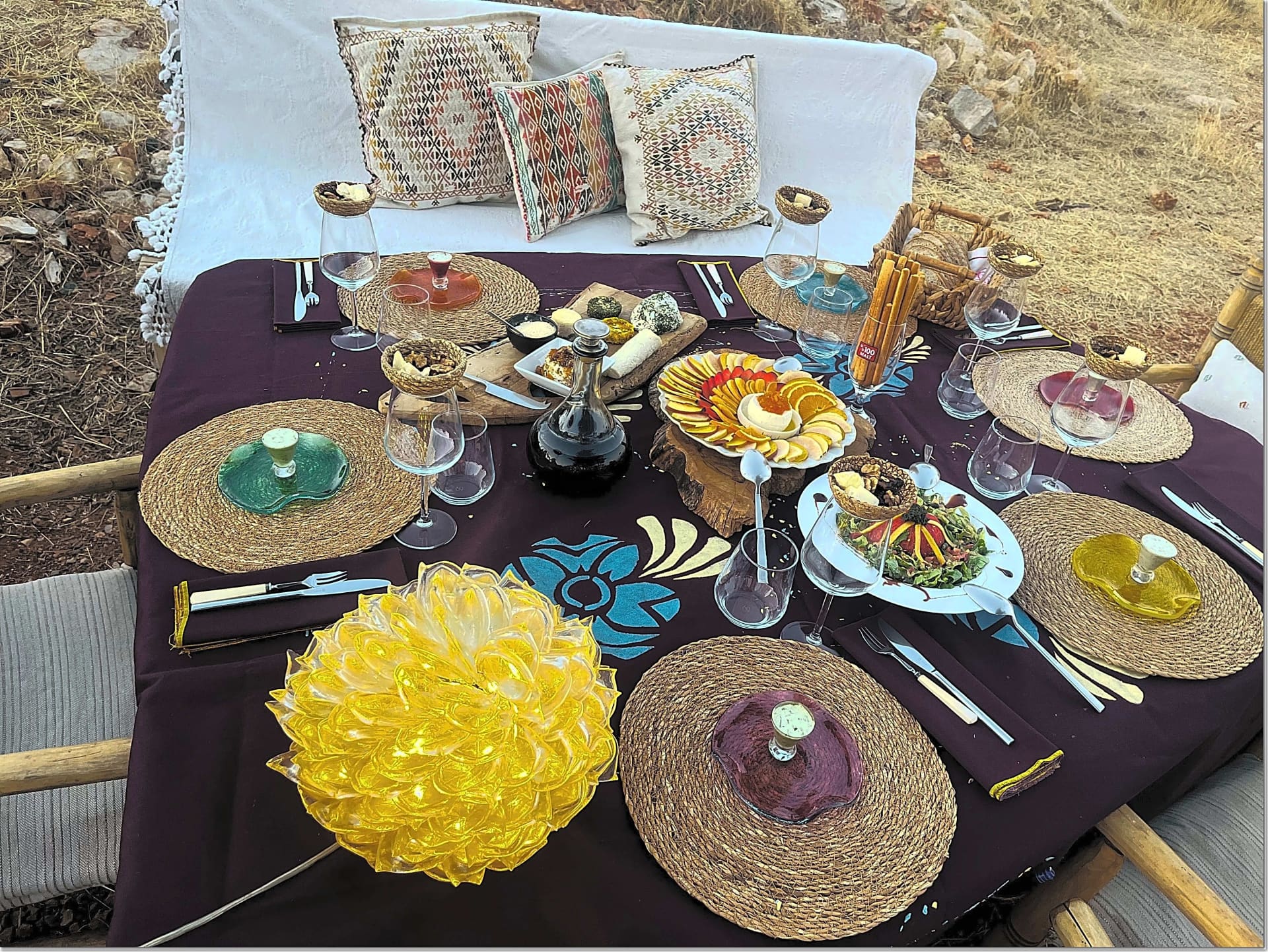
The Table to Farm experience is built around this rhythm. A single table on a hillside above the Aegean, set for a maximum of ten guests, with food prepared from what the farm produces that day. No menu. No explanation unless asked. The farm is off-grid. The goats move freely. Below, the coastline opens into the Gulf of Gökova. This is not a restaurant experience. It is an invitation into the agricultural rhythm of the peninsula — into the understanding that the food on the table is not a product but a consequence of a specific relationship between specific people and specific land.
The Aegean Gulet Charter offers the maritime register. Moving along the peninsula's southern coast by traditional gulet, stopping at bays that are not on any tourist map, arriving at archaeological sites from the sea rather than the road. The gulet itself is part of the rhythm — a wooden boat built by hand in a workshop on the peninsula, shaped by craftsmen who understand the relationship between wood and water in a way that no engineering manual can fully capture. Being on a gulet is being inside a tradition that is still alive, still functional, still producing boats that are used for the same purpose they were always used for: moving people across the Aegean.
Bodrum without beach clubs is not a quieter version of Bodrum with beach clubs. It is a different place entirely. It is the place that the beach clubs were built on top of, and that continues to exist beneath them, at a different pace and with a different set of priorities. The priority is not leisure. It is continuity — the continuation of a relationship with the sea and the land that has been going on for three thousand years and that has no particular interest in being interrupted.
The invitation is to participate in that continuity, briefly, on its own terms. Not as a consumer of an experience, but as a temporary participant in something that was happening long before you arrived and will continue long after you leave.
That is the different rhythm. It is worth finding.