But the marina is a threshold, not a destination. What lies beyond it — in the villages along the peninsula, in the archaeological sites that receive almost no visitors, in the private homes and workshops and olive groves that constitute the actual life of the place — is a different Bodrum entirely. One that does not announce itself.
The peninsula extends for roughly fifty kilometres west of the town. Along its northern coast, the landscape alternates between small bays and rocky headlands, with villages that have been fishing and farming the same ground for centuries. These villages are not picturesque in the way that travel photography requires — they are functional, slightly rough, built for people who live in them rather than people who visit. That is precisely what makes them worth visiting.
In Yalıkavak, before the marina development transformed the northern tip of the peninsula, there were gulet builders. Some remain. The traditional wooden boats that define the Aegean charter experience are still built by hand in workshops that smell of pine resin and linseed oil, by craftsmen who learned the work from their fathers and who understand the relationship between wood and water in a way that no engineering manual can fully capture. Watching a gulet take shape — the ribs going in, the planking following the curve of the hull — is an education in the relationship between material, skill, and purpose.
The cultural world of Bodrum is built around this kind of depth. Not the depth of the marina, which is horizontal — spread across the water, visible from every terrace — but the depth of the peninsula itself, which is vertical, layered, and requires descent.
Private experiences in Bodrum are composed around access to this second layer. They begin, often, before the town wakes. The Halicarnassus ruins — the site of one of the Seven Wonders of the Ancient World — are at their most legible at six in the morning, when the light is low and the shadows are long and there is no one else there. The mausoleum of Mausolus is gone, dismantled by the Knights of St John in the fifteenth century to build the castle that now defines the town's skyline. But the foundations remain, and the scale of what was built here is still readable in the ground. Standing in it at dawn, you understand something about ambition and about the relationship between power and permanence that no museum exhibit can convey.
The Aegean Gulet Charter experience offers a different kind of access — the access of the water itself. Moving along the peninsula's southern coast by traditional gulet, stopping at bays that are not on any tourist map, arriving at archaeological sites from the sea rather than the road. The Aegean coast is best understood from the water. The relationship between the land and the sea — the way the mountains come down to the shore, the way the light changes the colour of the water through the day — is only fully visible from a boat.
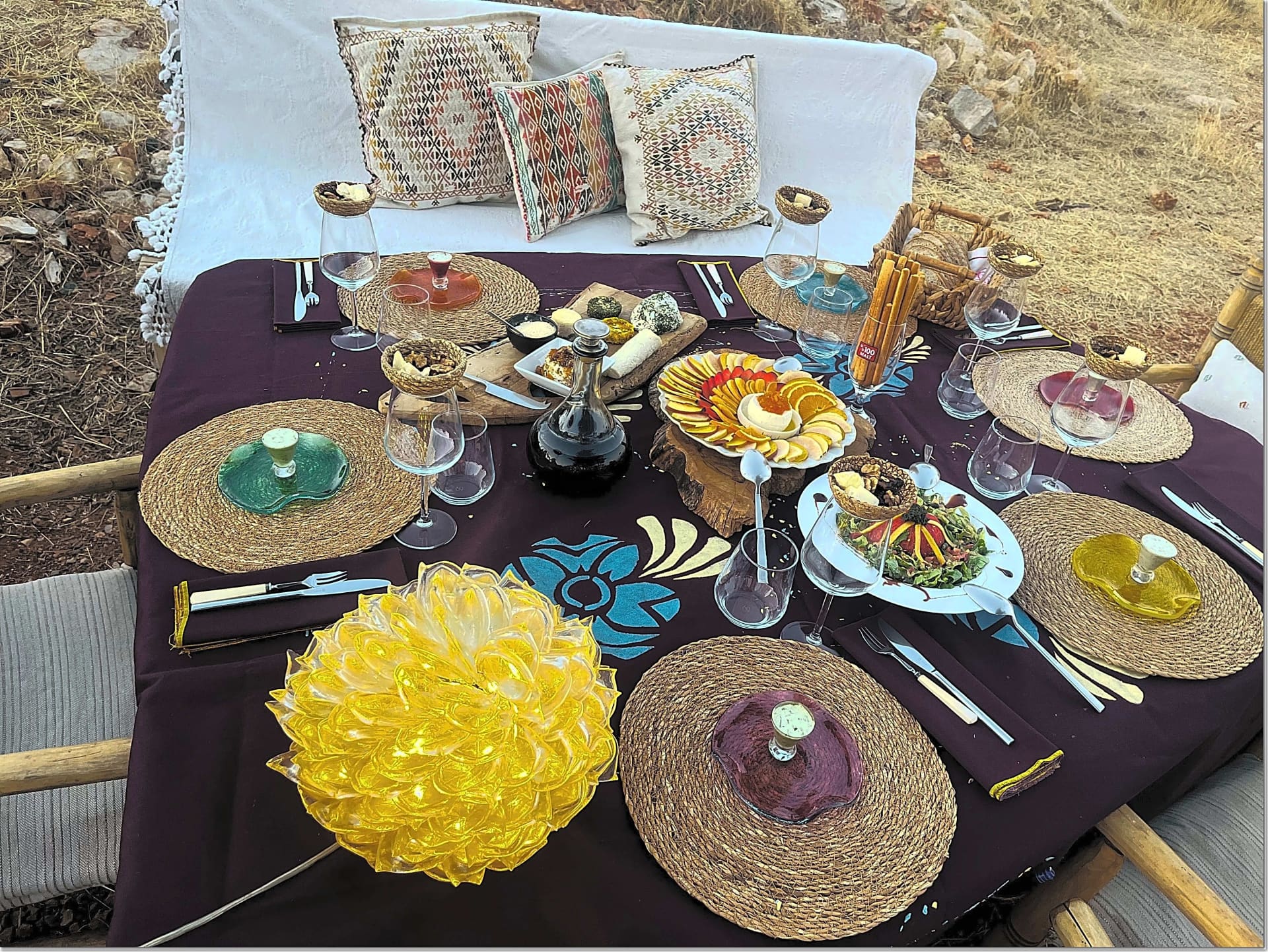
The Table to Farm experience captures the other register: the agricultural one. A single table on a hillside above the Aegean, set for a maximum of ten guests, with food prepared from what the farm produces. No menu. No explanation unless asked. The farm is off-grid. The goats move freely. Below, the coastline opens into the Gulf of Gökova. This is not a restaurant experience. It is an invitation into a way of living that most people have forgotten is possible — and that the peninsula has been practising, in various forms, for three thousand years.
Private access in Bodrum is not about removing other people from the picture. It is about arriving at the right hour, with the right introduction, in the right frame of mind. The peninsula rewards patience. It has no interest in performing for visitors who are not paying attention. But for those who arrive slowly, who are willing to let the place set the pace, it opens in ways that the marina never suggests are possible.
That opening is the experience. Everything else is threshold.